VIN: 101073
Some cars are just special. This one is special in so many ways.
First, the model is brilliant, eccentric, and arcane. The SP250 is the last car Daimler launched before being sold to Jaguar (in 1960) was the SP250 sports car — ironically, as it was the only British sports car with the guts to compete with Jaguar’s XK series.
While the SP250's design earned nicknames like “catfish” because of its rather toothy, protuberant front grille, drivers found a lot to love.
What made this little fiberglass-bodied whippet of a car stand out to them was not the grille but the powerful V8 with hemispherical cylinder heads and a central camshaft. The heart of a rhinoceros in the body of a hummingbird.
Originally named the Daimler Dart, the name was hurriedly changed after Chrysler threatened suit for infringement on its Dodge Dart model name. Daimler simply substituted the design project number, SP250, presumably referencing the 2.5 -liter motor.
While the SP50 shares some design concepts with the Triumph TR3 of the era, four more cylinders took it into the performance stratosphere by comparison. (The motor was actually designed by Edward Turner, famed Triumph motorcycle engineer.)
The entire package was engineered for performance and was quite technologically advanced for its day, including Girling four-wheel disc brakes.
Then there is this particular example, and all the ways it is special — different in important ways from other examples of the marque.
This car, chassis No. 101073, was ordered in January 1962 and finished on April 12 of that year. It is what’s known as a “B-spec” SP250, meaning that it has an upgraded chassis that corrected a pronounced shimmy in earlier models.
It was exported and sold new in California — into the loving, 40-year custody of an Air Force engineer who appreciated its design and did everything he could to maximize its performance and longevity.
Here are some examples of his custodial care:
He converted the steering to a well-regarded Triumph TR6 rack-and-pinion system — something many SP250 owners did because the original steering box left much to be desired.
He installed an aluminum radiator and electric fan, because with the steering conversion, the original fan wouldn’t fit.
He installed front sway bars and rear axle locating rods. The car has a stiffer, more stable feel with much more modern handling than many examples.
He installed a custom stainless steel dual exhaust with Dynamax mufflers.
He fitted a Laycock overdrive — an enormous improvement.
He moved the battery to the trunk for better weight distribution.
He converted the car to a negative ground system, switched two electronic ignition, converted the oil-filter system to a convenient spin-on design, added a cooling expansion tank, and modified the gearshift to a much more positive feel, reminiscent of Jaguar.
Then came the most recent owner, who kept up his end of the bargain with this great machine.
He has rebuilt the clutch and brake hydraulics, overhauled the brake cylinders, changed out the aluminum radiator and cooling fan to new models, removed, refurbished, recoated and reinstalled the gas tank and replaced fuel lines — and fitted a brand-new convertible top.
This car came from the factory painted Mountain Blue. Because that color, Daimler’s first effort at a metallic paint, tended to flake, many SP50s originally painted in the color have seen repaints, as this one obviously has.
But the beautiful gray leather interior with seats and door pockets piped in blue is believed to be original as it matches factory specs exactly. It was fitted at the factory with optional painted wire wheels fitted with wide whitewalls.
In so many ways, this car is special. Sixty-four years after arriving on U.S. shores, it remains a ferocious runner and an absolute motoring joy.
VIN: 101073
Some cars are just special. This one is special in so many ways.
First, the model is brilliant, eccentric, and arcane. The SP250 is the last car Daimler launched before being sold to Jaguar (in 1960) was the SP250 sports car — ironically, as it was the only British sports car with the guts to compete with Jaguar’s XK series.
While the SP250's design earned nicknames like “catfish” because of its rather toothy, protuberant front grille, drivers found a lot to love.
What made this little fiberglass-bodied whippet of a car stand out to them was not the grille but the powerful V8 with hemispherical cylinder heads and a central camshaft. The heart of a rhinoceros in the body of a hummingbird.
Originally named the Daimler Dart, the name was hurriedly changed after Chrysler threatened suit for infringement on its Dodge Dart model name. Daimler simply substituted the design project number, SP250, presumably referencing the 2.5 -liter motor.
While the SP50 shares some design concepts with the Triumph TR3 of the era, four more cylinders took it into the performance stratosphere by comparison. (The motor was actually designed by Edward Turner, famed Triumph motorcycle engineer.)
The entire package was engineered for performance and was quite technologically advanced for its day, including Girling four-wheel disc brakes.
Then there is this particular example, and all the ways it is special — different in important ways from other examples of the marque.
This car, chassis No. 101073, was ordered in January 1962 and finished on April 12 of that year. It is what’s known as a “B-spec” SP250, meaning that it has an upgraded chassis that corrected a pronounced shimmy in earlier models.
It was exported and sold new in California — into the loving, 40-year custody of an Air Force engineer who appreciated its design and did everything he could to maximize its performance and longevity.
Here are some examples of his custodial care:
He converted the steering to a well-regarded Triumph TR6 rack-and-pinion system — something many SP250 owners did because the original steering box left much to be desired.
He installed an aluminum radiator and electric fan, because with the steering conversion, the original fan wouldn’t fit.
He installed front sway bars and rear axle locating rods. The car has a stiffer, more stable feel with much more modern handling than many examples.
He installed a custom stainless steel dual exhaust with Dynamax mufflers.
He fitted a Laycock overdrive — an enormous improvement.
He moved the battery to the trunk for better weight distribution.
He converted the car to a negative ground system, switched two electronic ignition, converted the oil-filter system to a convenient spin-on design, added a cooling expansion tank, and modified the gearshift to a much more positive feel, reminiscent of Jaguar.
Then came the most recent owner, who kept up his end of the bargain with this great machine.
He has rebuilt the clutch and brake hydraulics, overhauled the brake cylinders, changed out the aluminum radiator and cooling fan to new models, removed, refurbished, recoated and reinstalled the gas tank and replaced fuel lines — and fitted a brand-new convertible top.
This car came from the factory painted Mountain Blue. Because that color, Daimler’s first effort at a metallic paint, tended to flake, many SP50s originally painted in the color have seen repaints, as this one obviously has.
But the beautiful gray leather interior with seats and door pockets piped in blue is believed to be original as it matches factory specs exactly. It was fitted at the factory with optional painted wire wheels fitted with wide whitewalls.
In so many ways, this car is special. Sixty-four years after arriving on U.S. shores, it remains a ferocious runner and an absolute motoring joy.

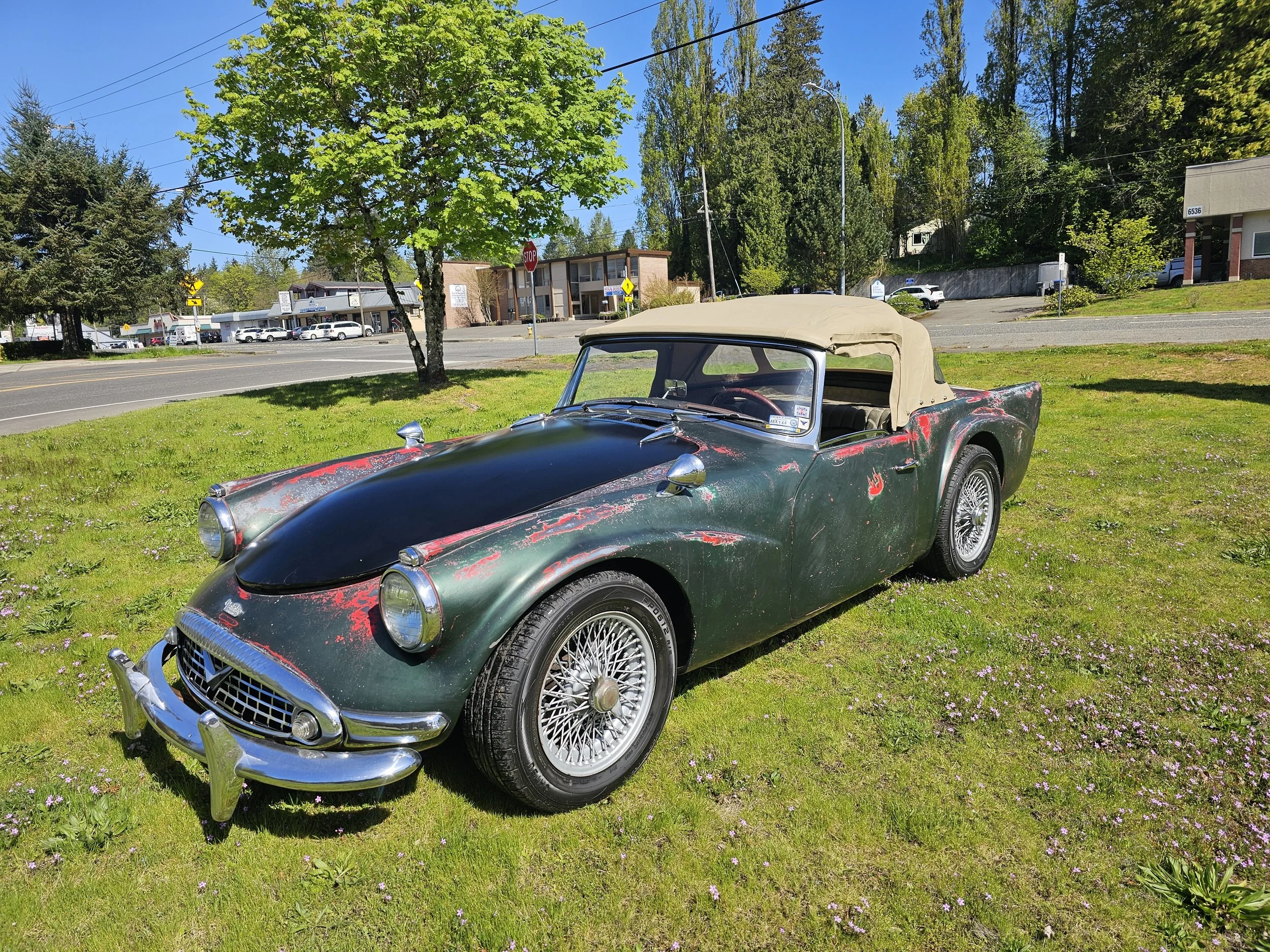 Image 1 of 27
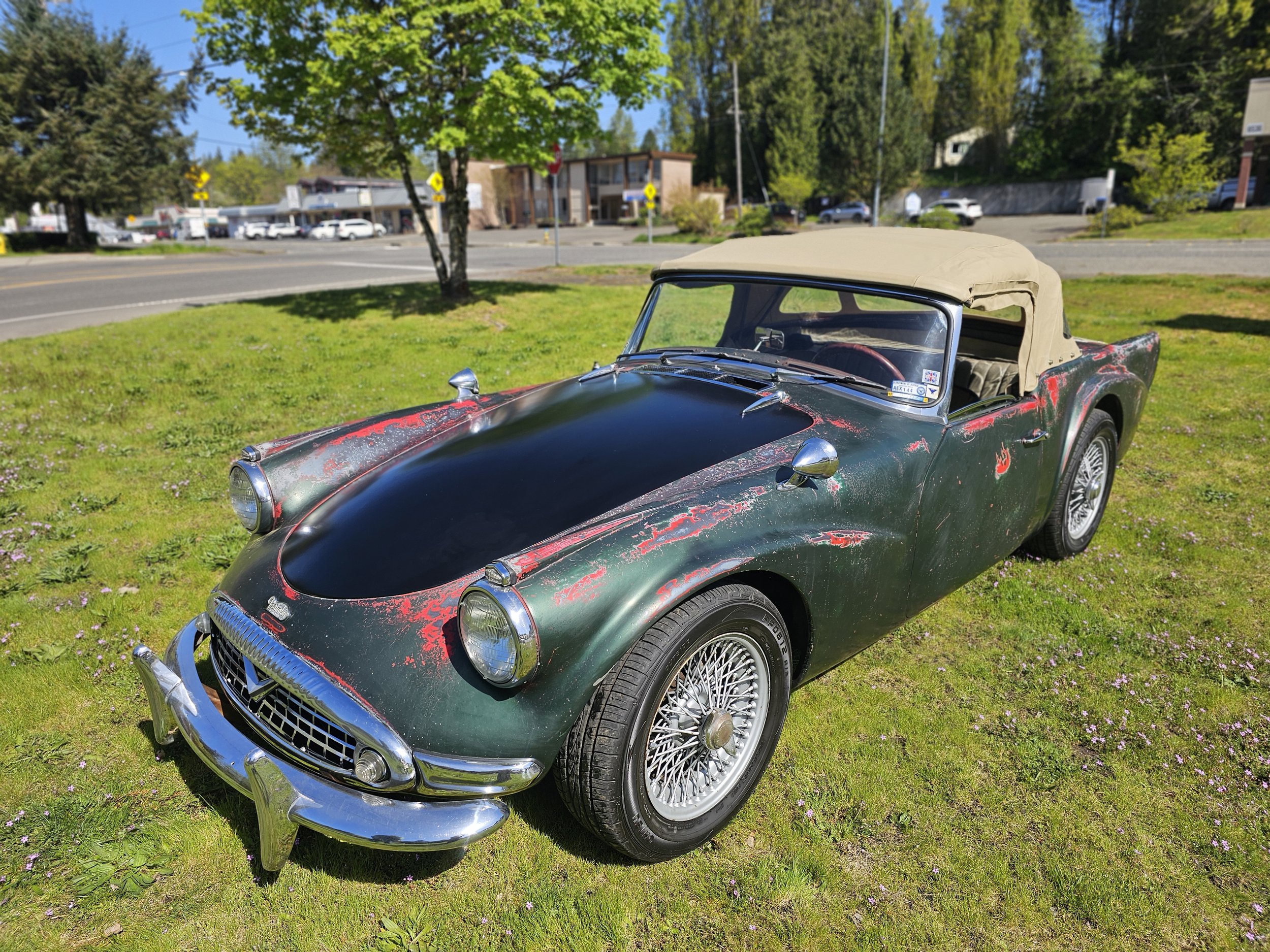 Image 2 of 27
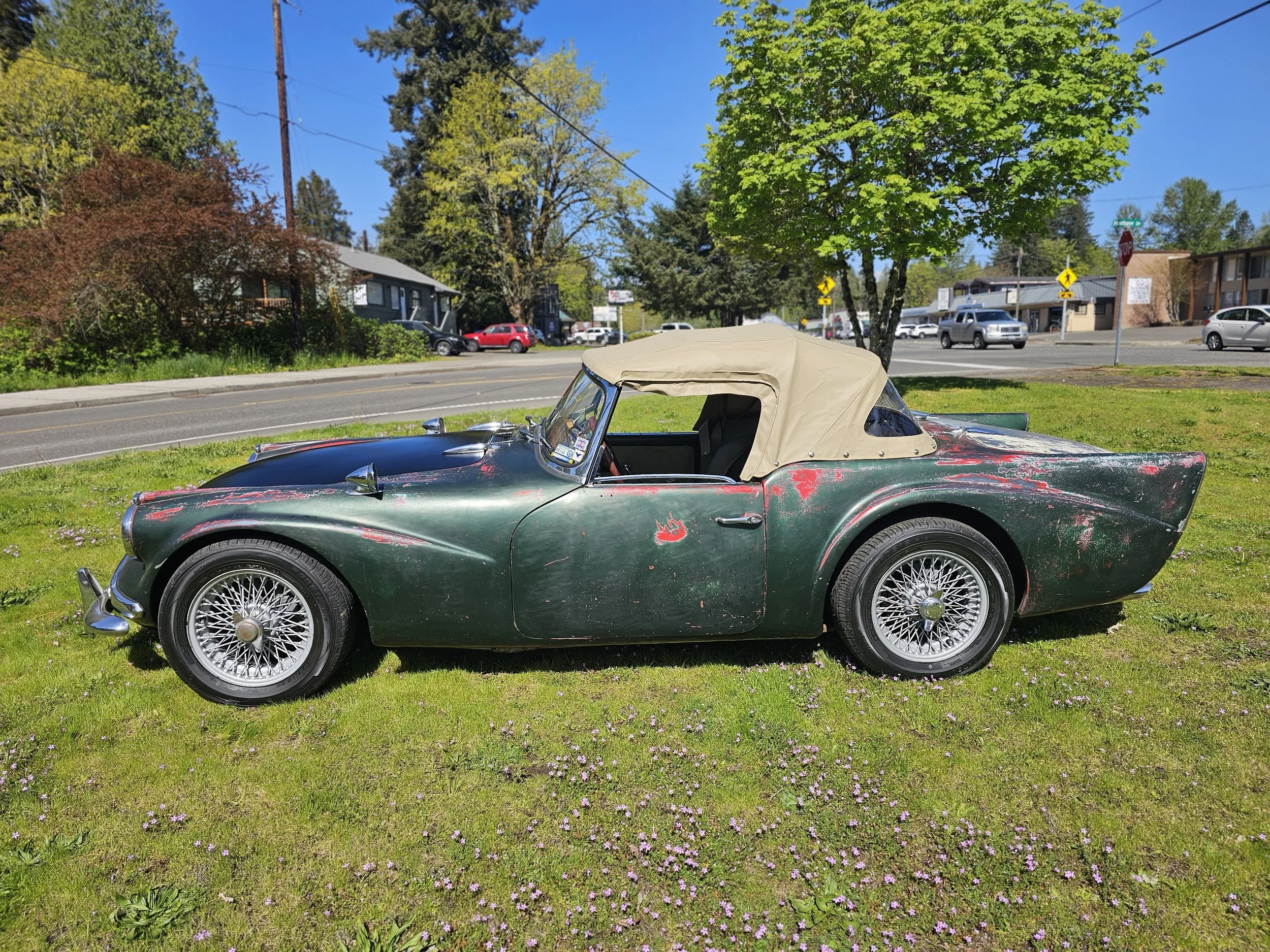 Image 3 of 27
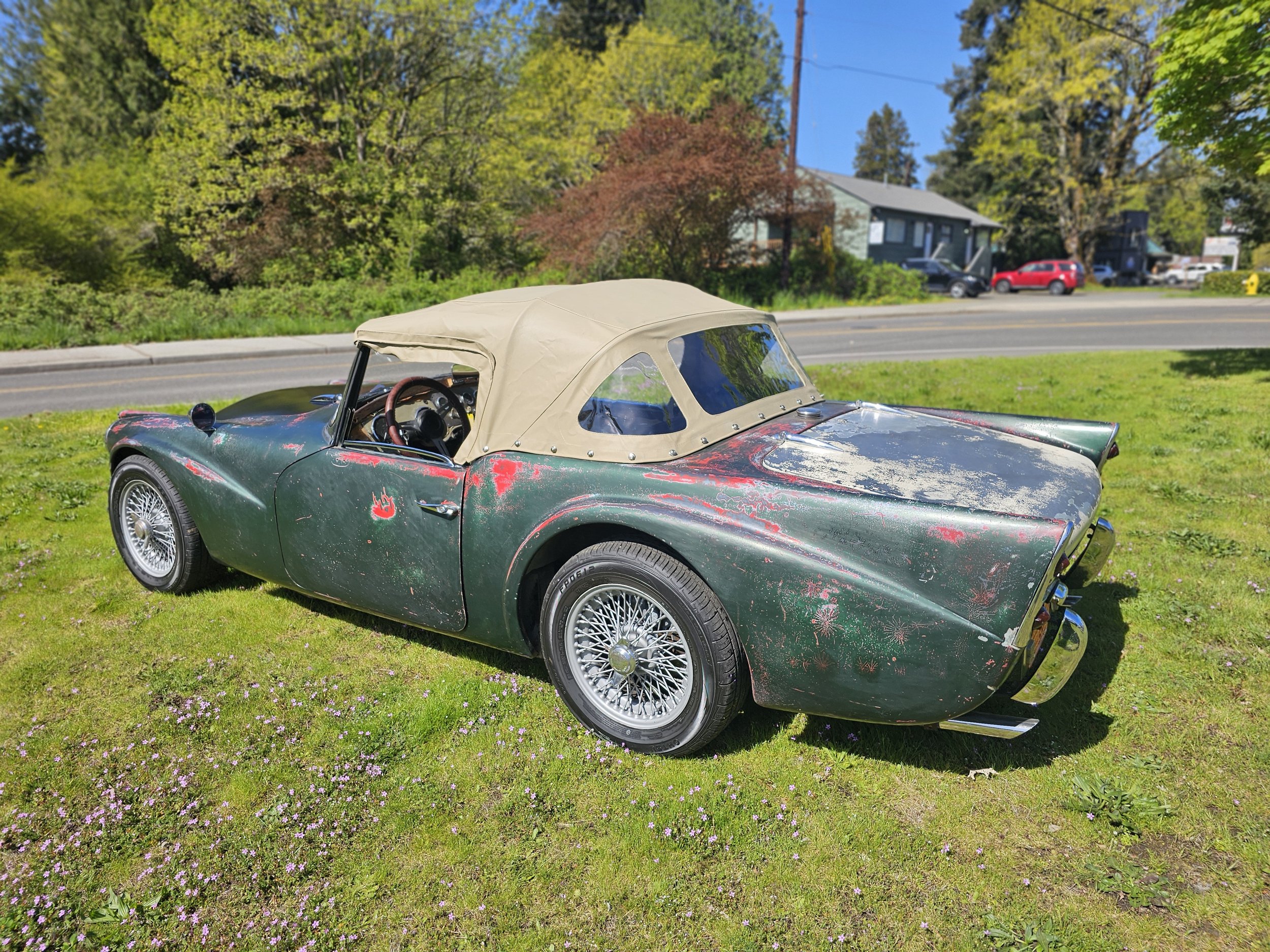 Image 4 of 27
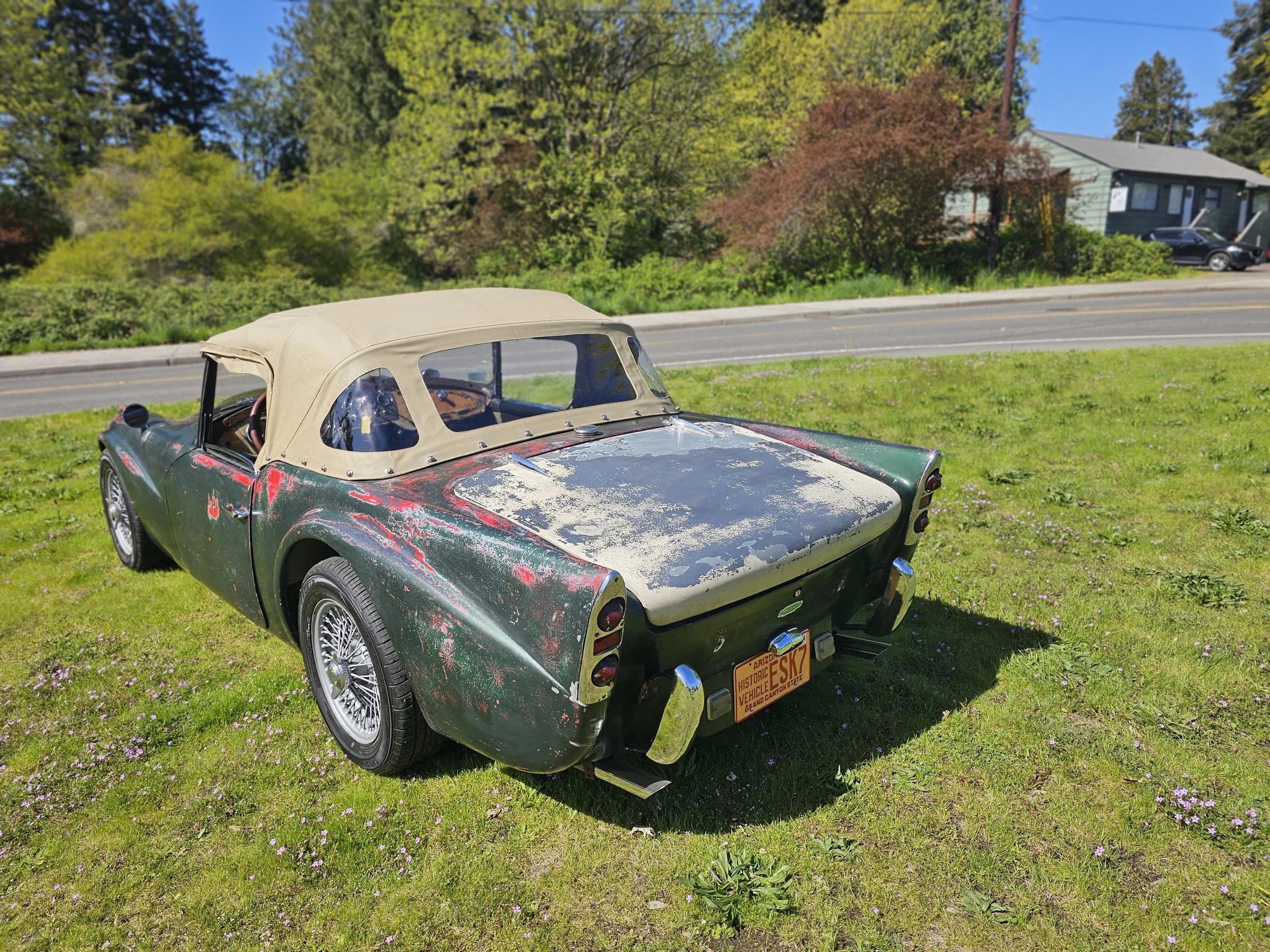 Image 5 of 27
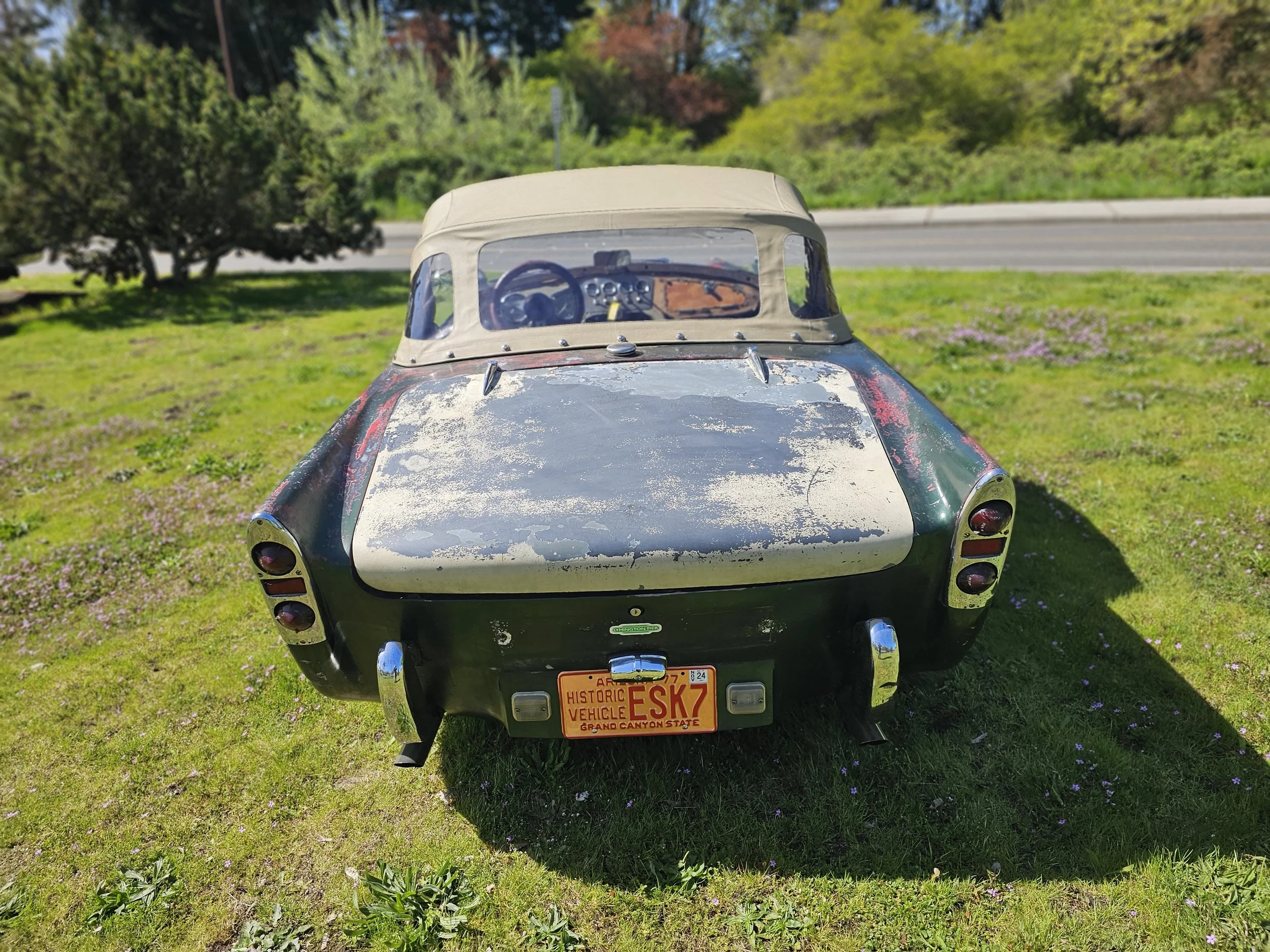 Image 6 of 27
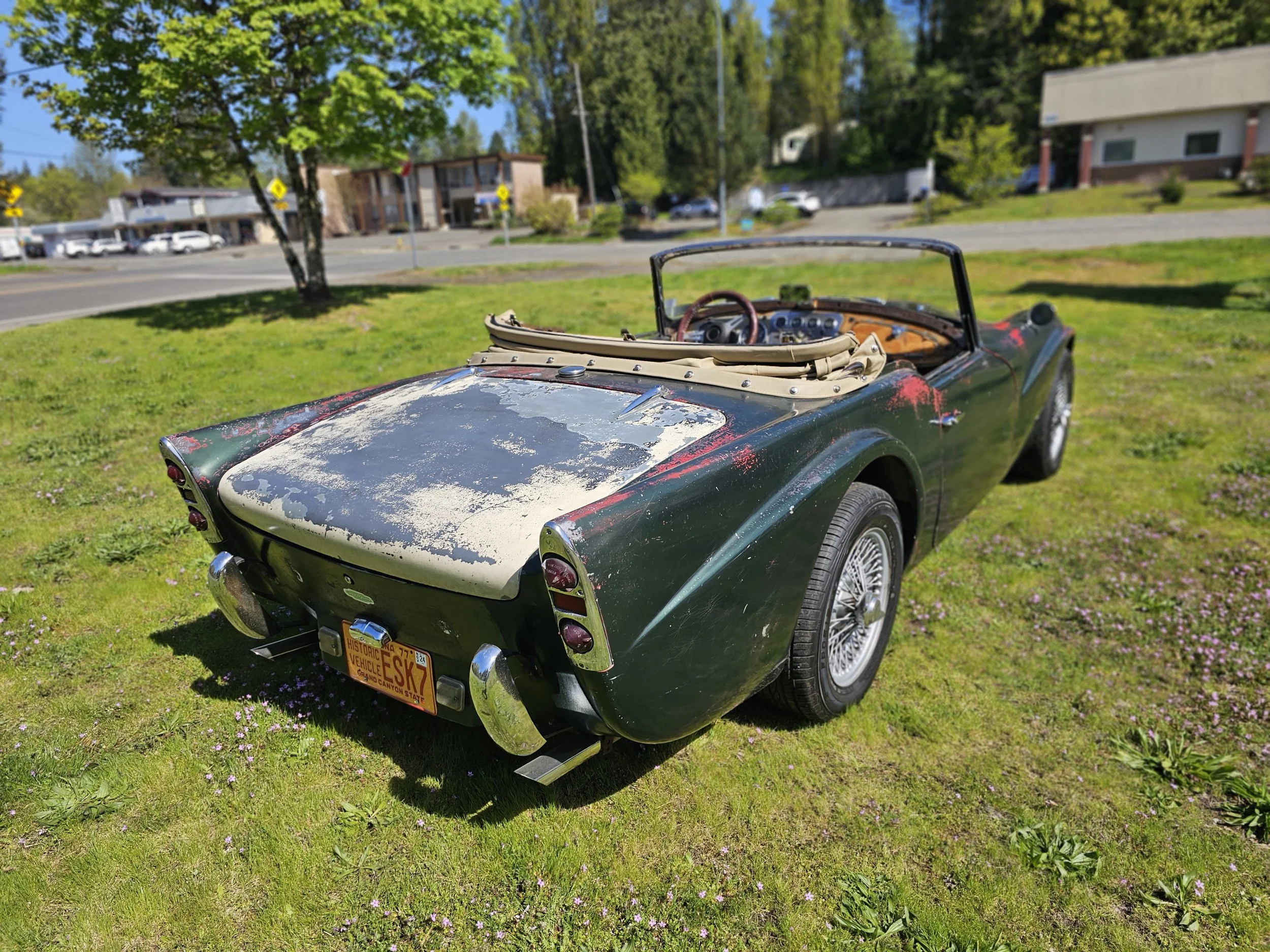 Image 7 of 27
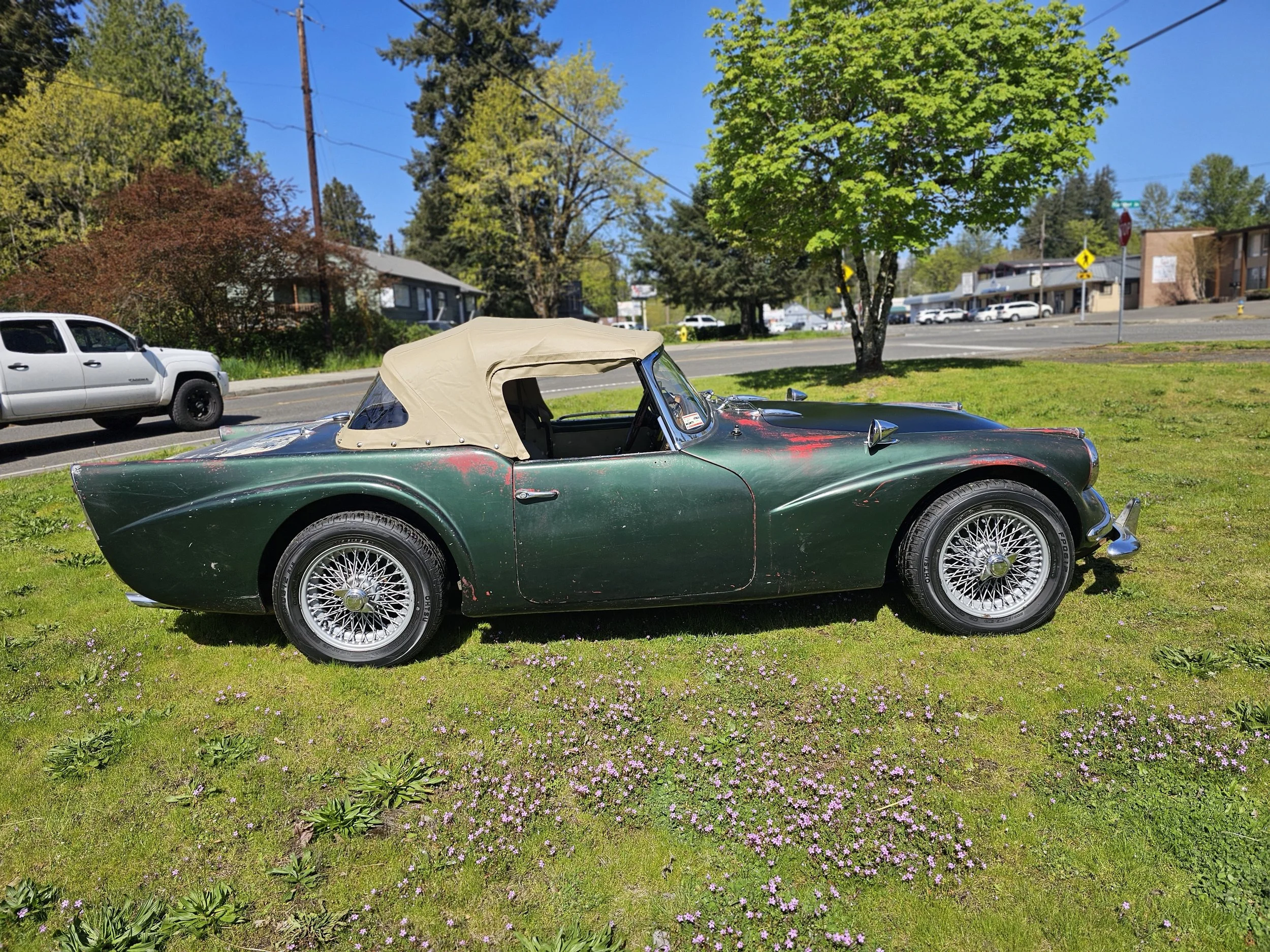 Image 8 of 27
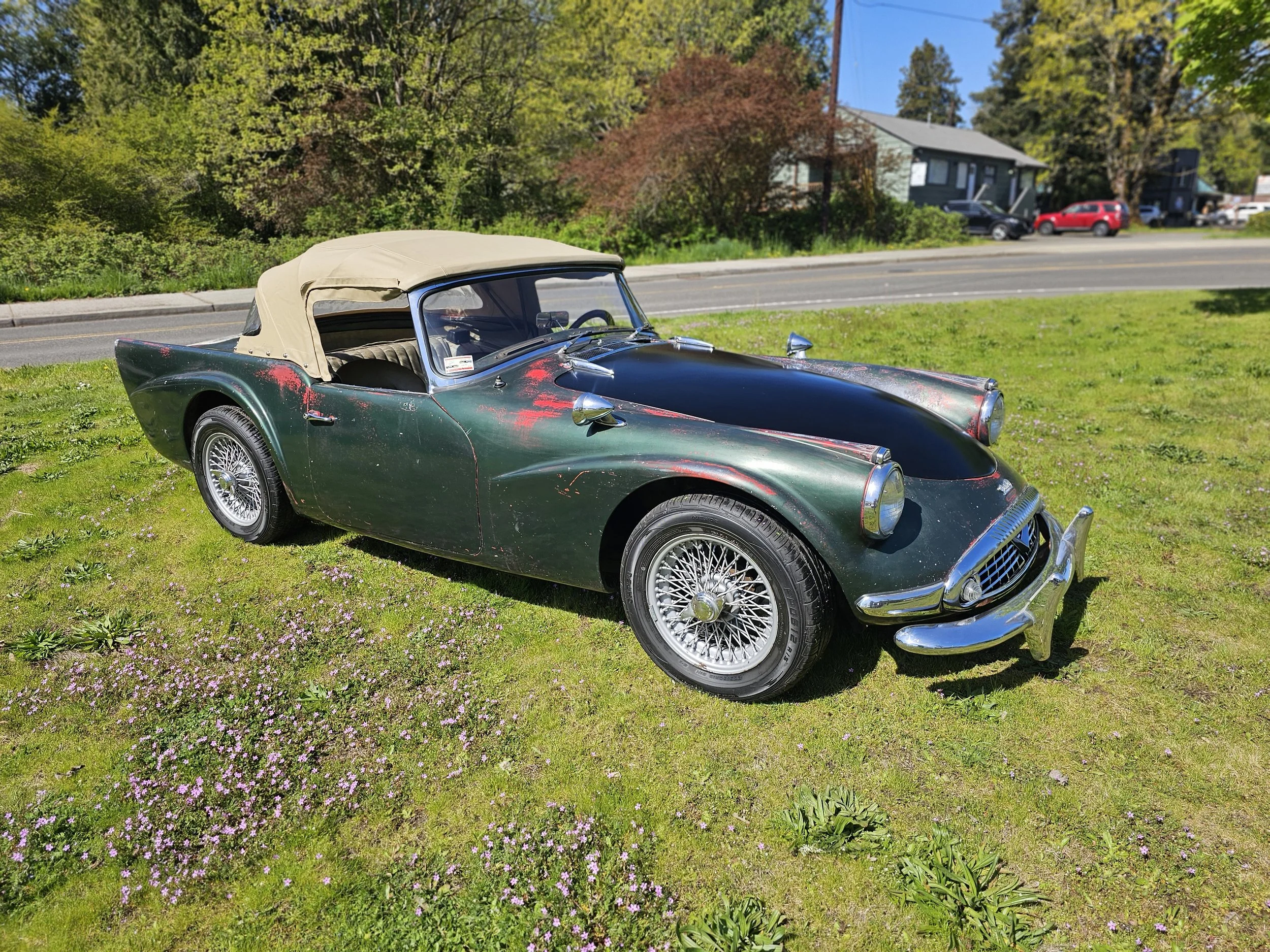 Image 9 of 27
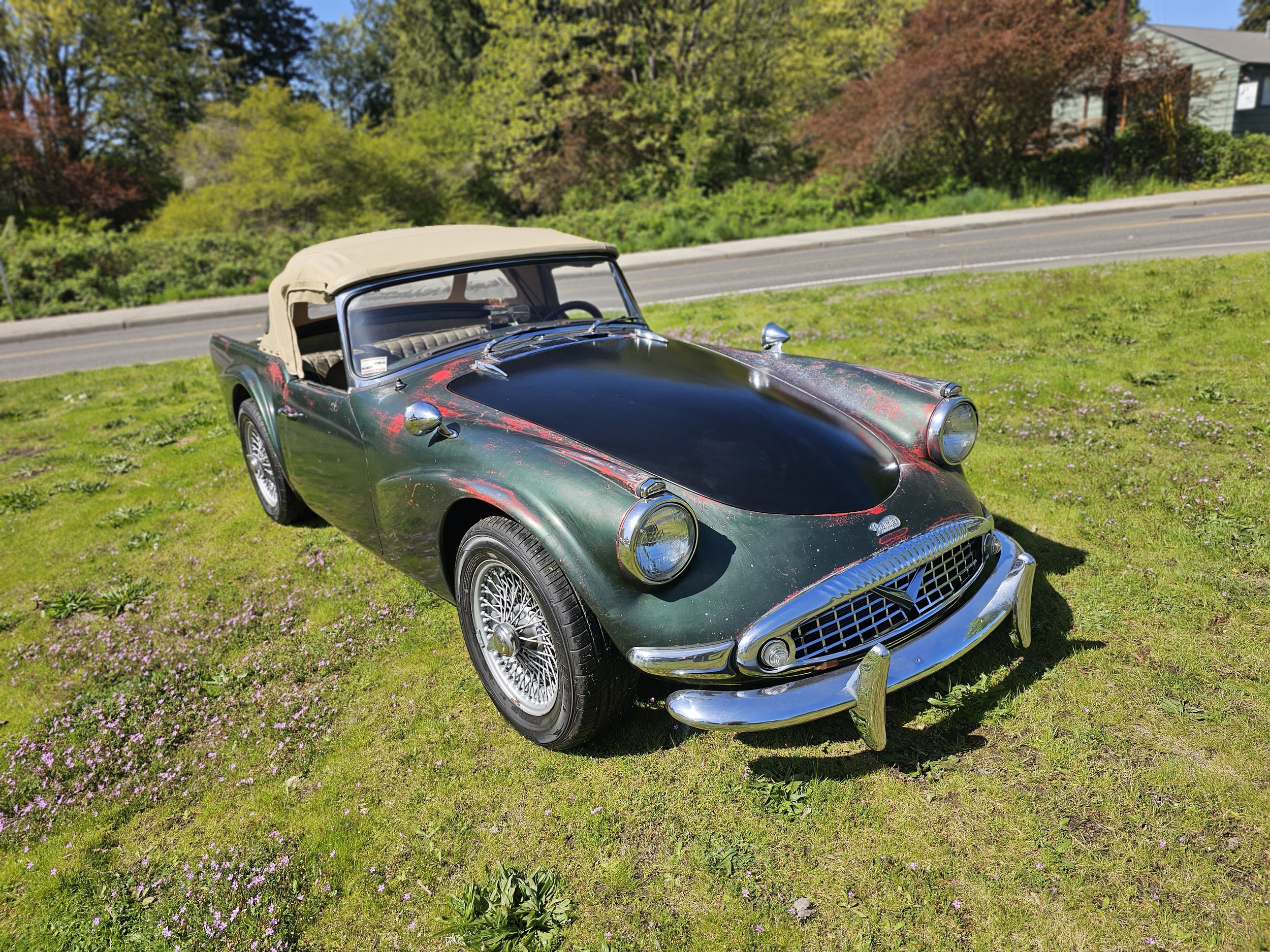 Image 10 of 27
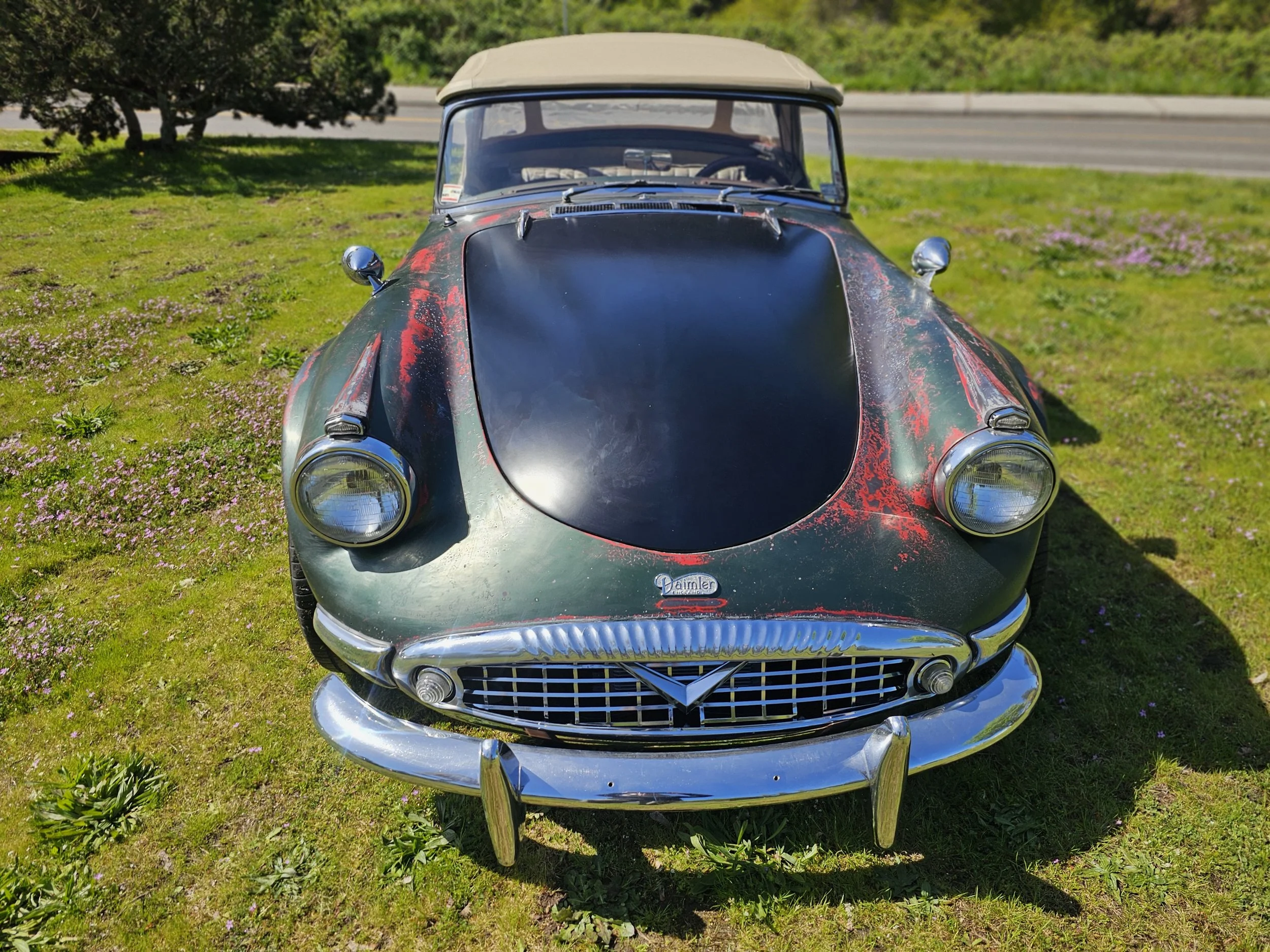 Image 11 of 27
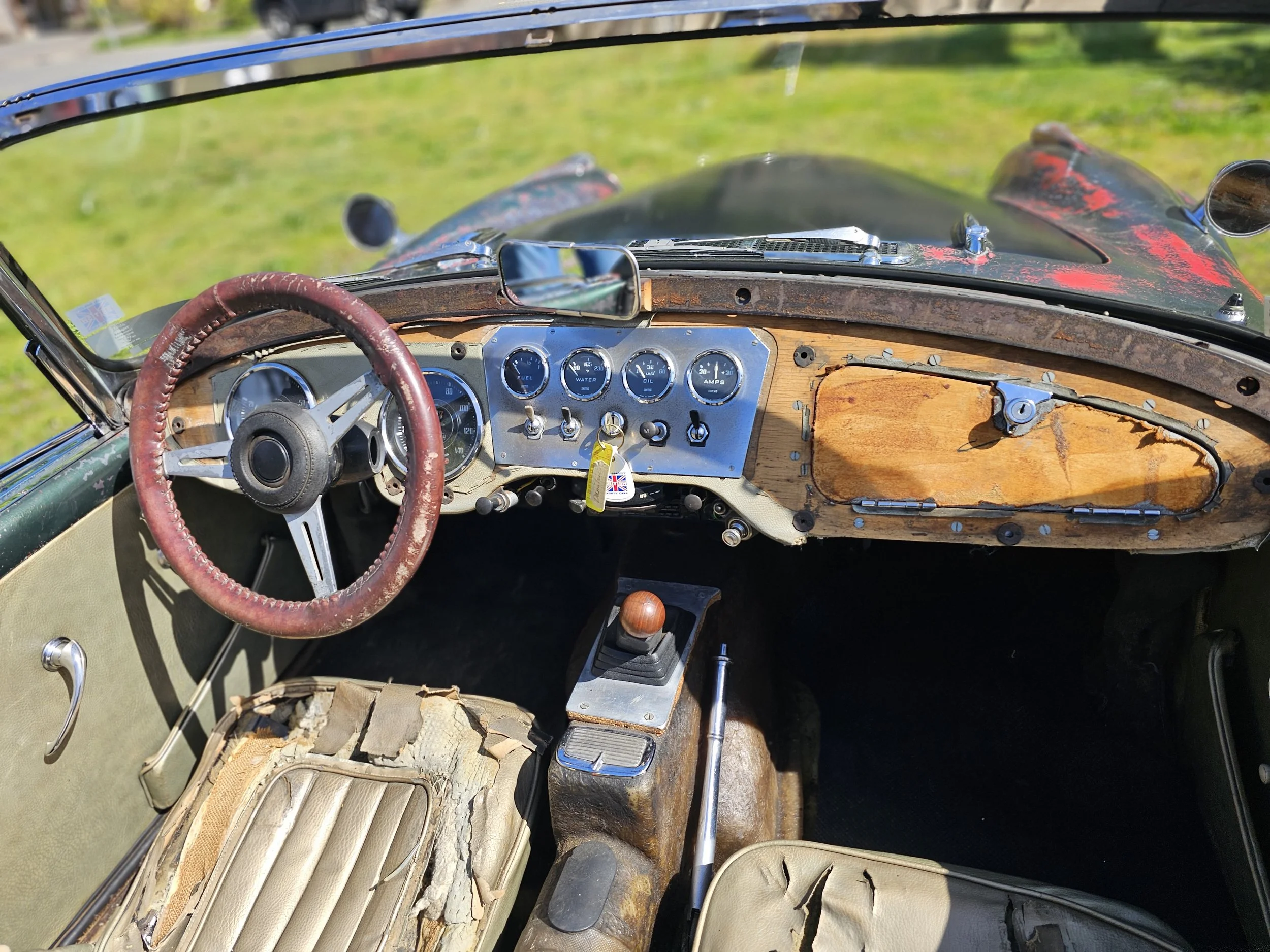 Image 12 of 27
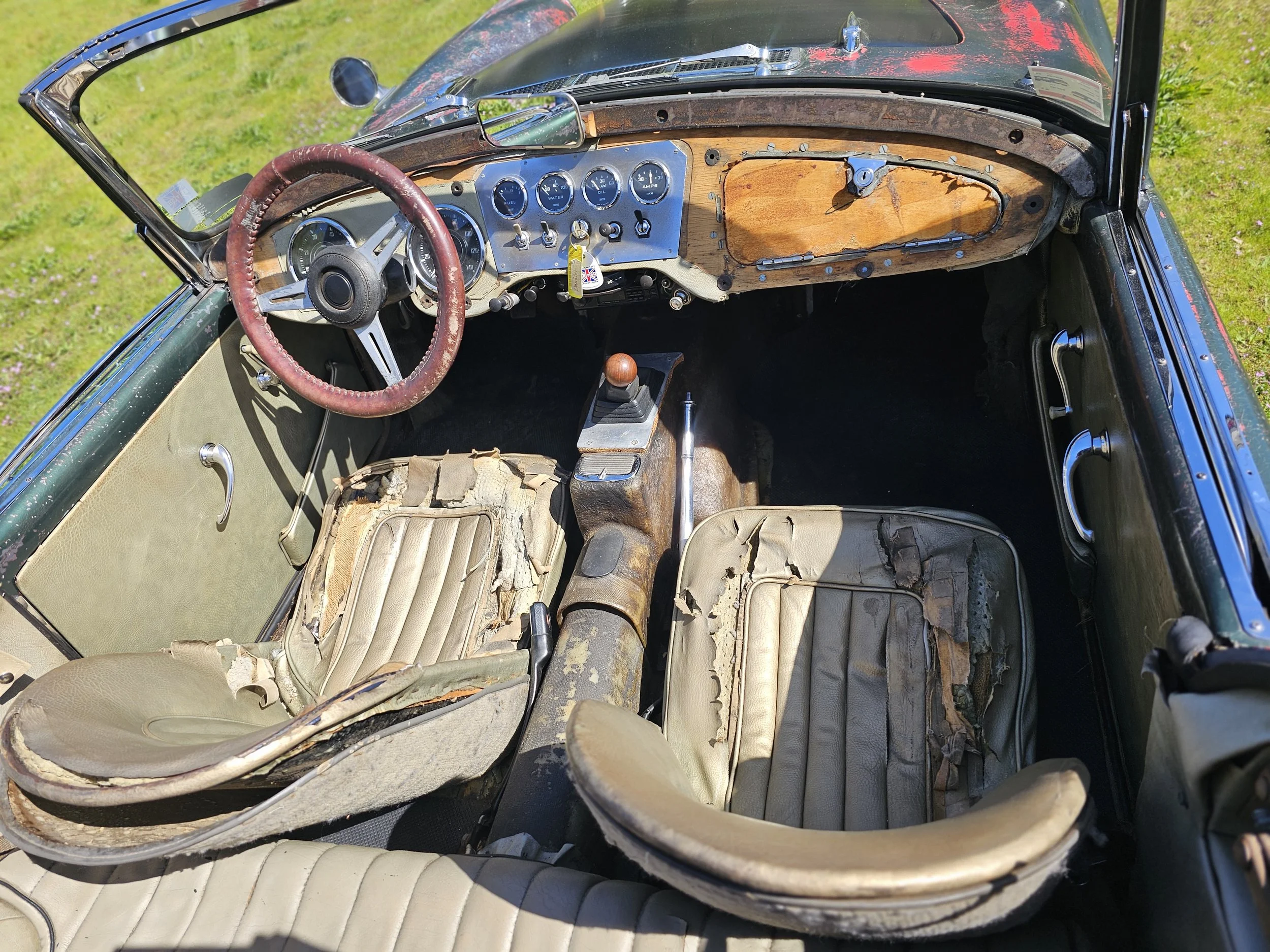 Image 13 of 27
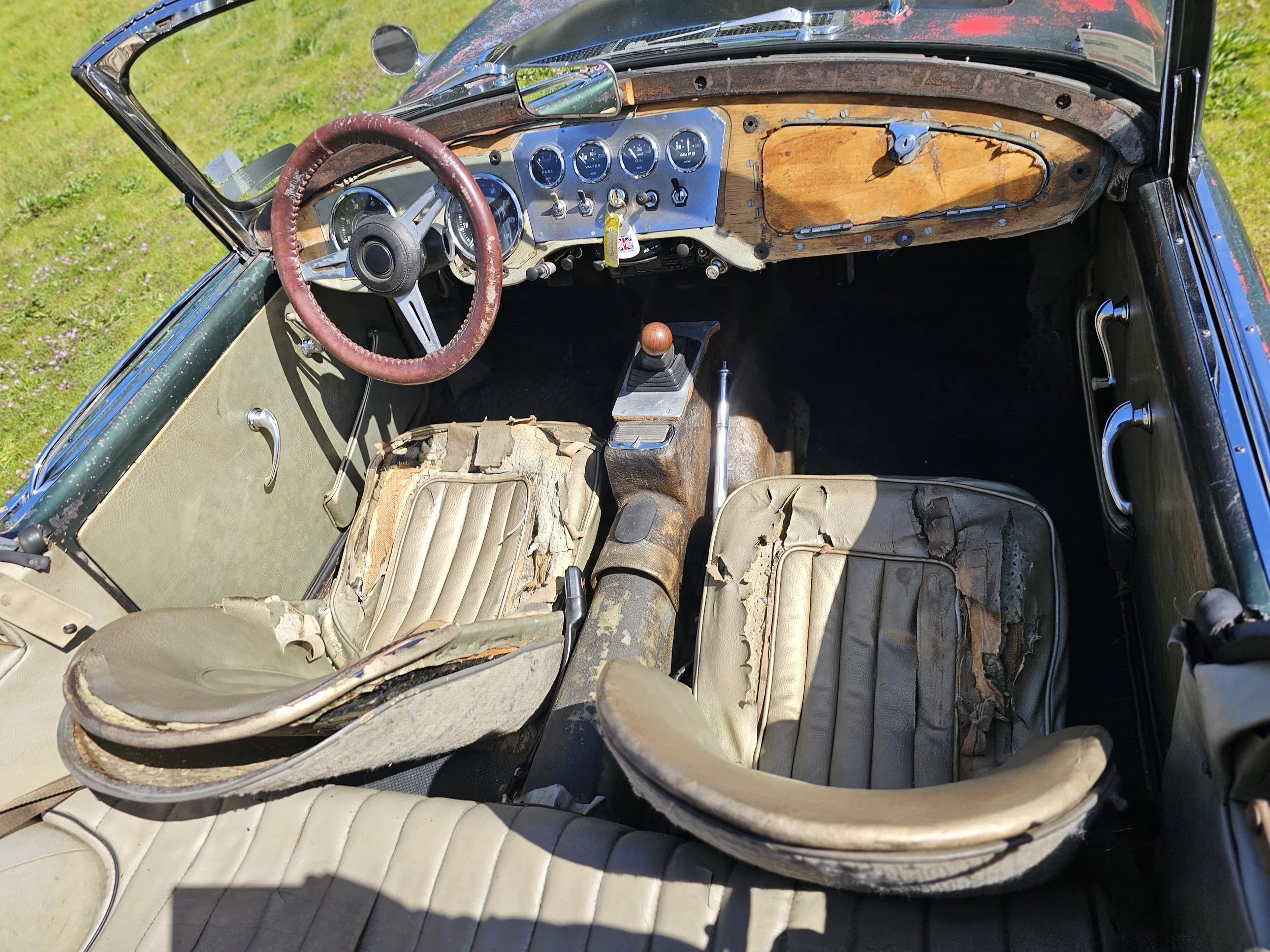 Image 14 of 27
 Image 15 of 27
 Image 16 of 27
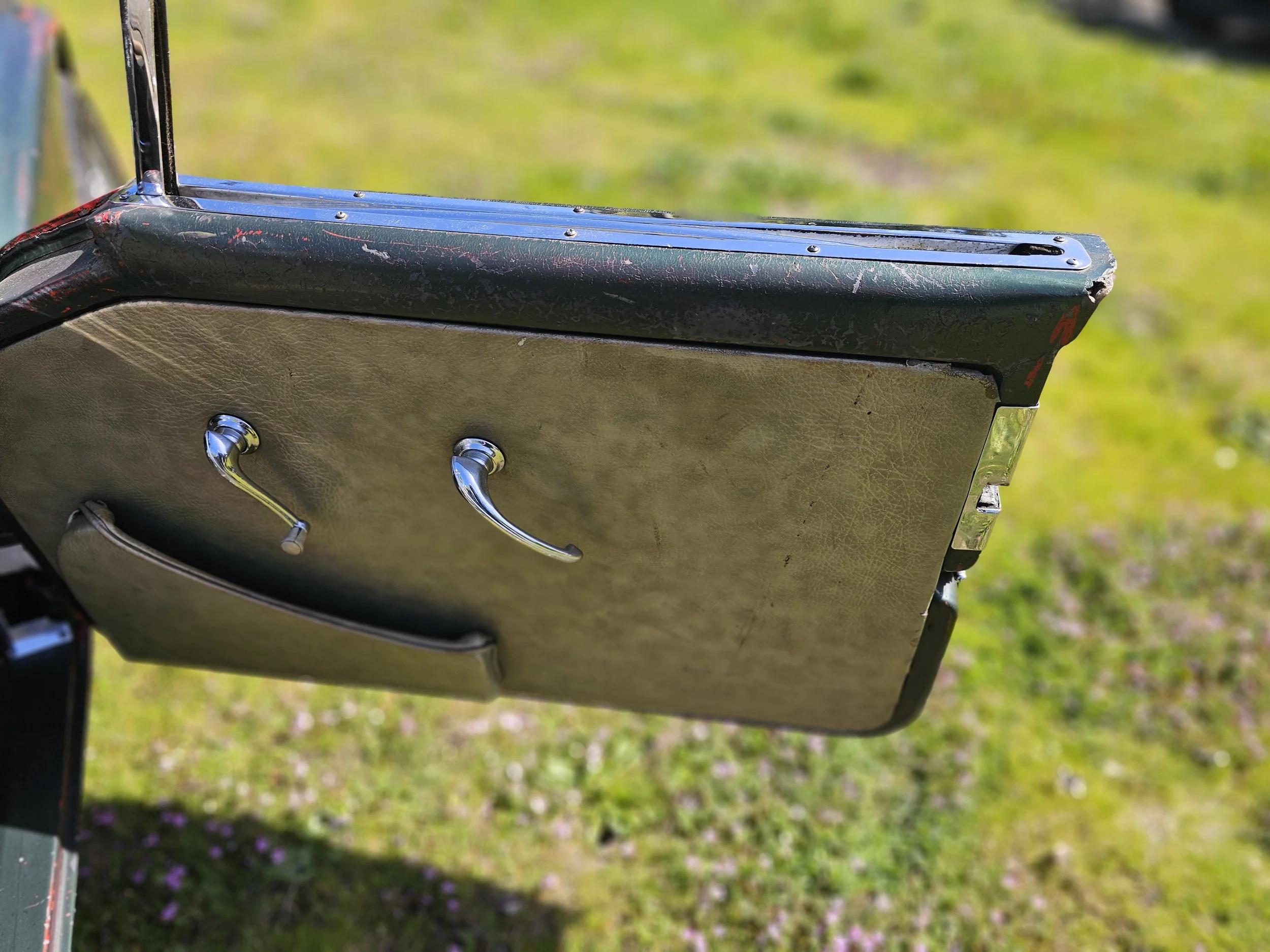 Image 17 of 27
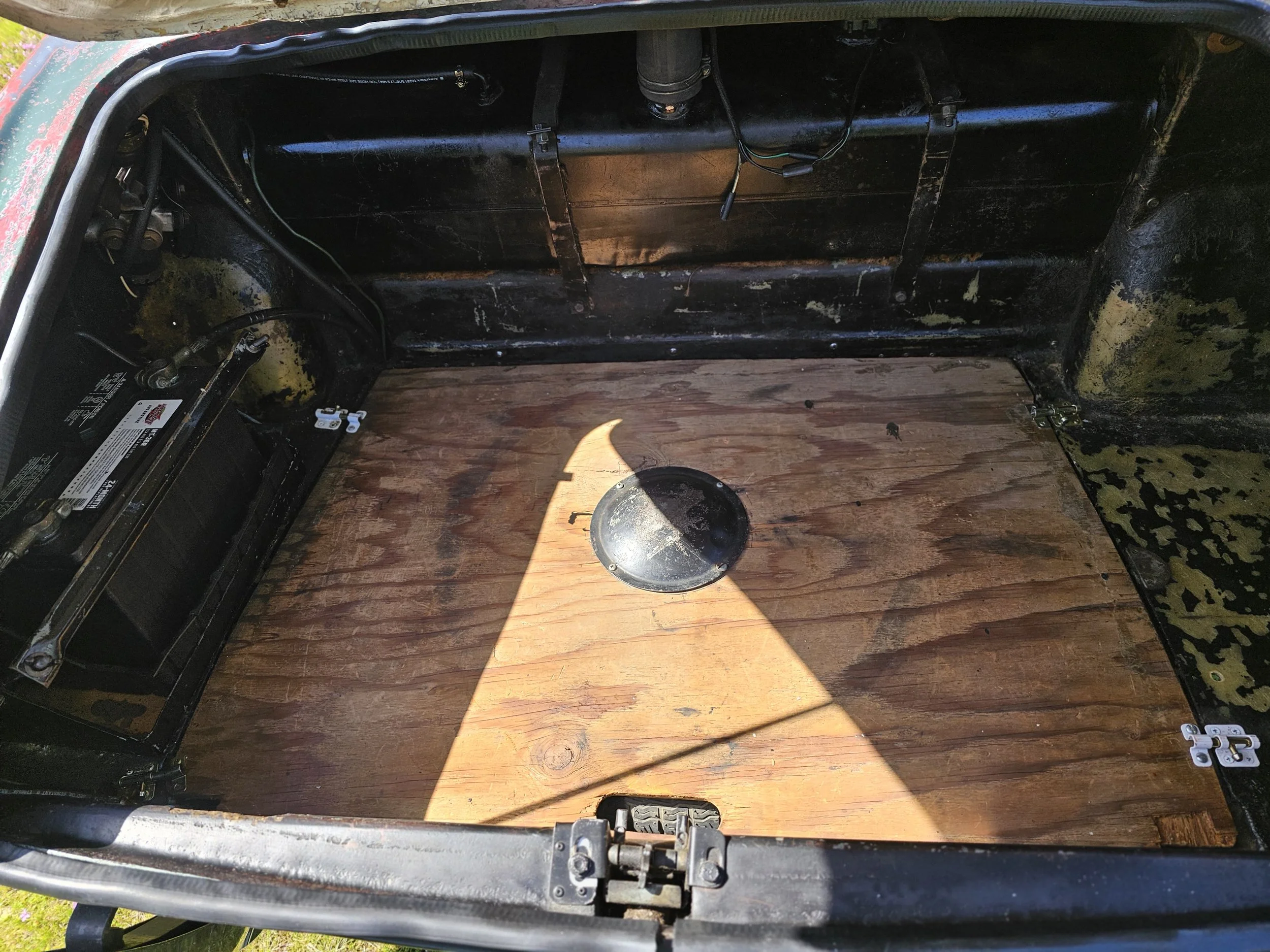 Image 18 of 27
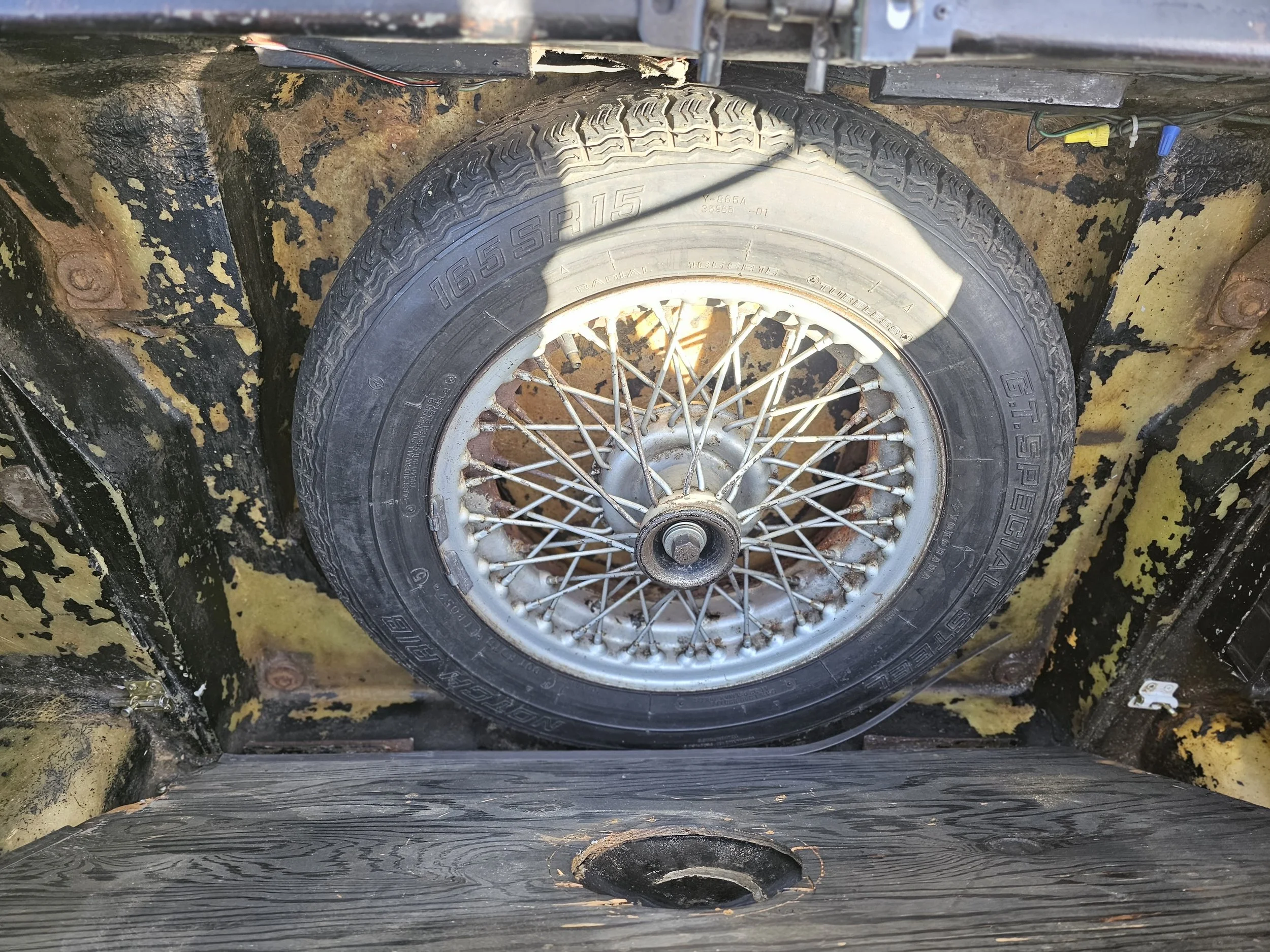 Image 19 of 27
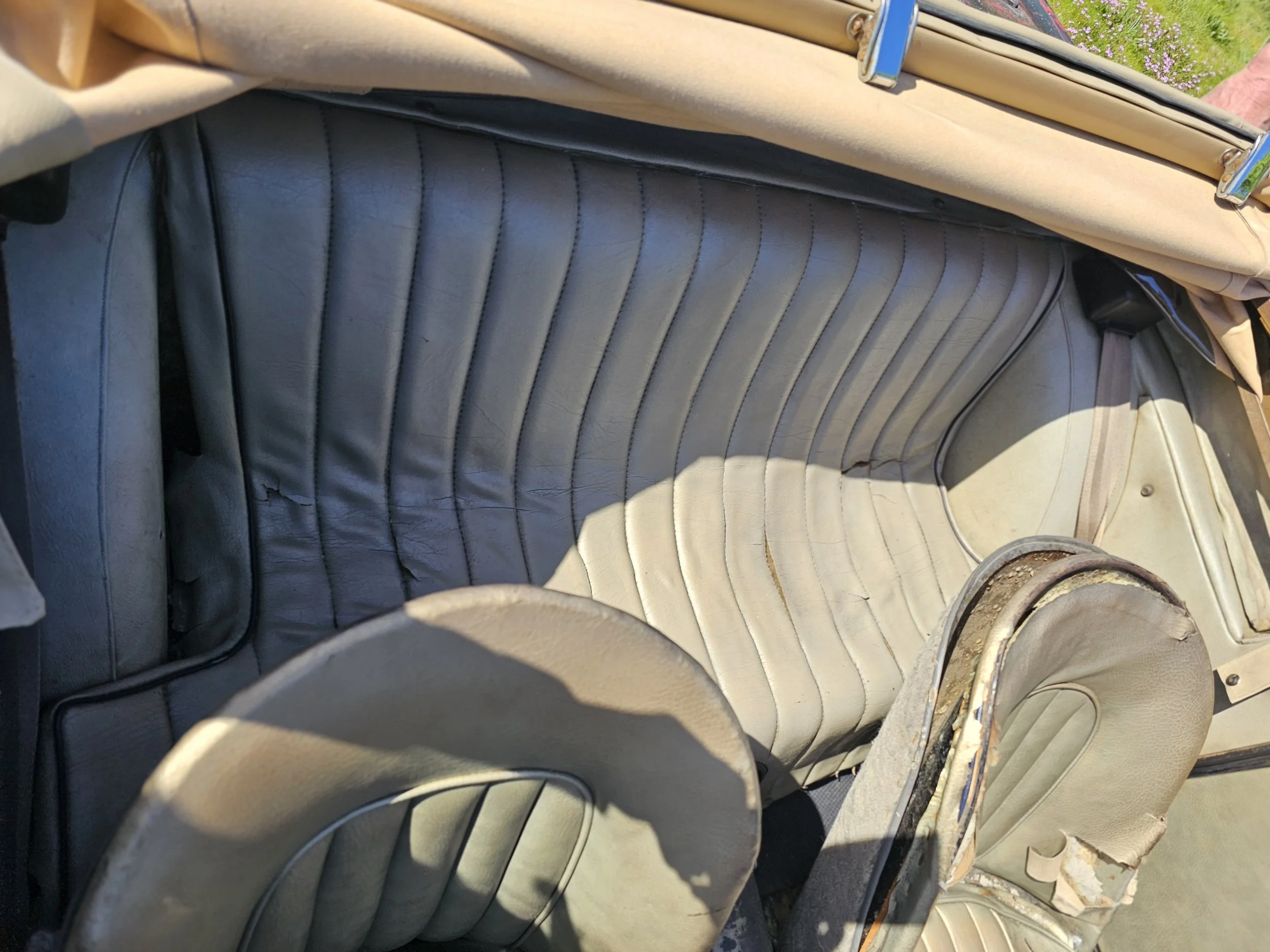 Image 20 of 27
 Image 21 of 27
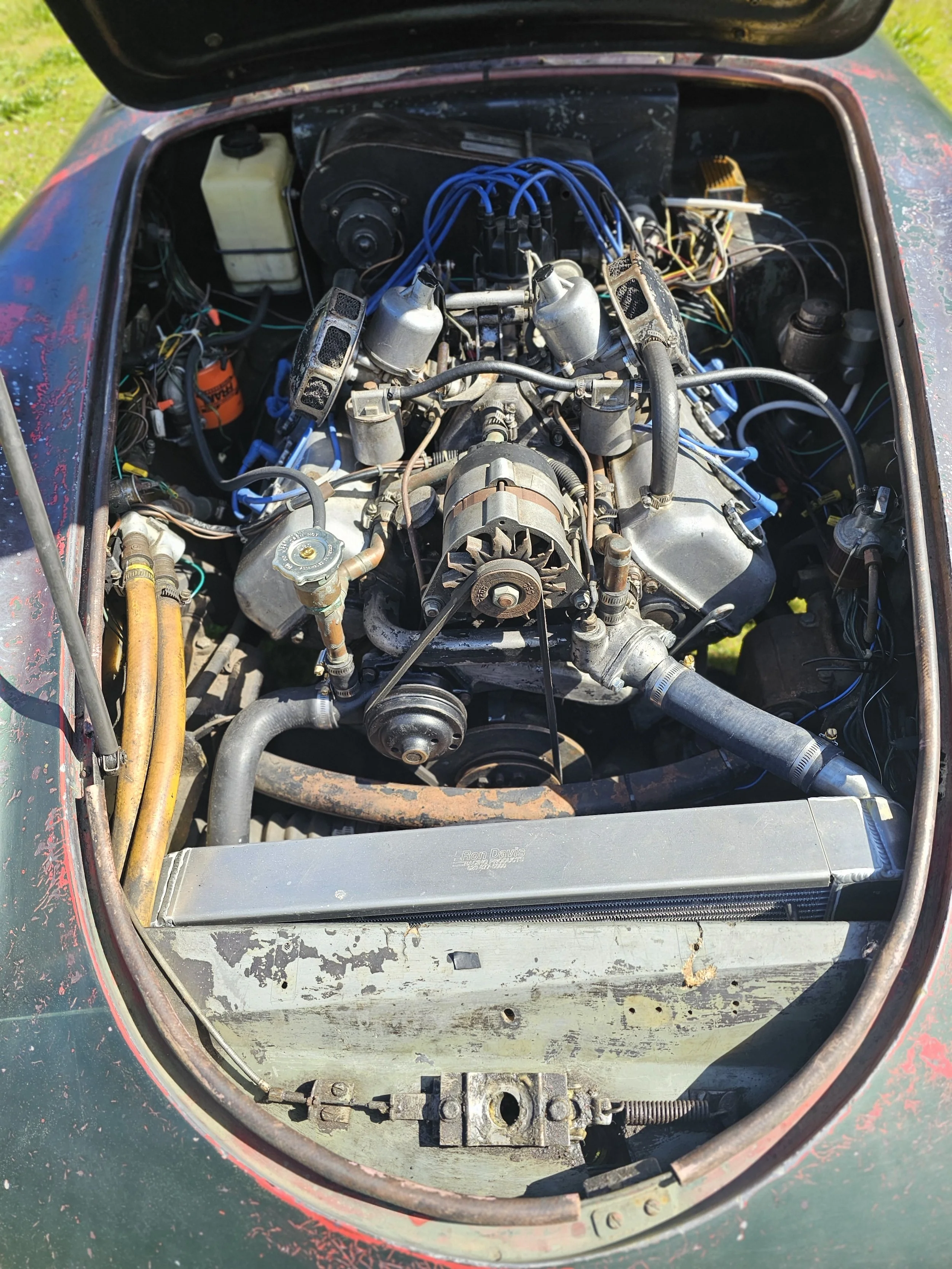 Image 22 of 27
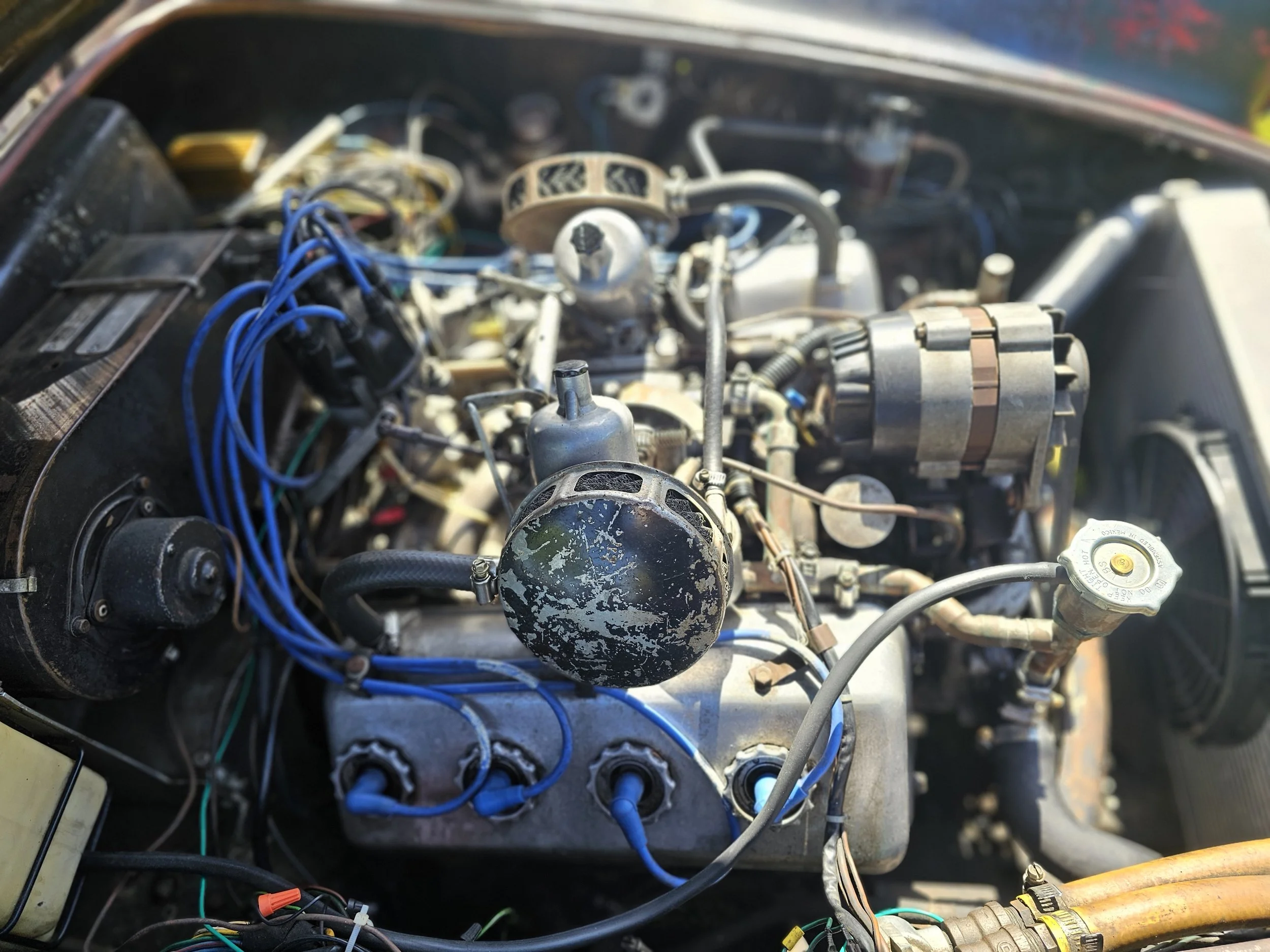 Image 23 of 27
 Image 24 of 27
 Image 25 of 27
 Image 26 of 27
 Image 27 of 27